
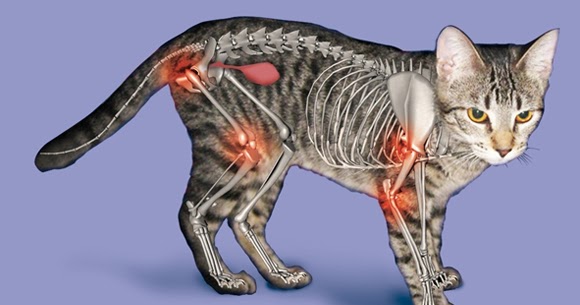

When we are grooming cats, we need to think of the cat’s well-being and comfort, as well as the anatomy of a cat.
If you ignore anatomy and the normal range of movement of the joints, not only does it cause the cat instant pain and discomfort, but it can also cause long-term pain for conditions such as arthritis.
Personally, when I work with cats, I like to keep them in a natural position for much of the grooming, then roll them over to groom the underside.
Pulling a joint into an unnatural range of motion can also cause a cat to react aggressively out of fear, pain, or stress.
Please note these are anecdotal observations by a qualified Veterinary physiotherapist.
Figure 1: ‘Scruff’ while clipping the underarm.
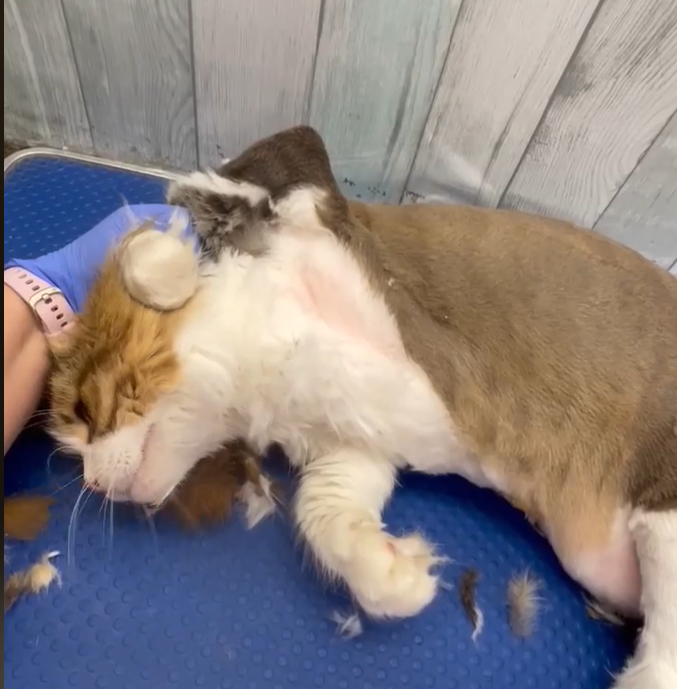
Here we are demonstrating overabduction and external rotation of the cat’s shoulder joint.
Placing joints like the shoulder into end range positions (eg. figure 1), can overstretch the joint capsule and surrounding ligaments. This can cause the cat a lot of pain during grooming and lead to lameness after the grooming session.
As cats don’t seem to have as strong musculature as dogs in stabilising their shoulders and seem to have more flexibility, you could sprain the ligaments in the shoulder, causing instability.
Figure 2: Hip hyperextension for clipping the belly.
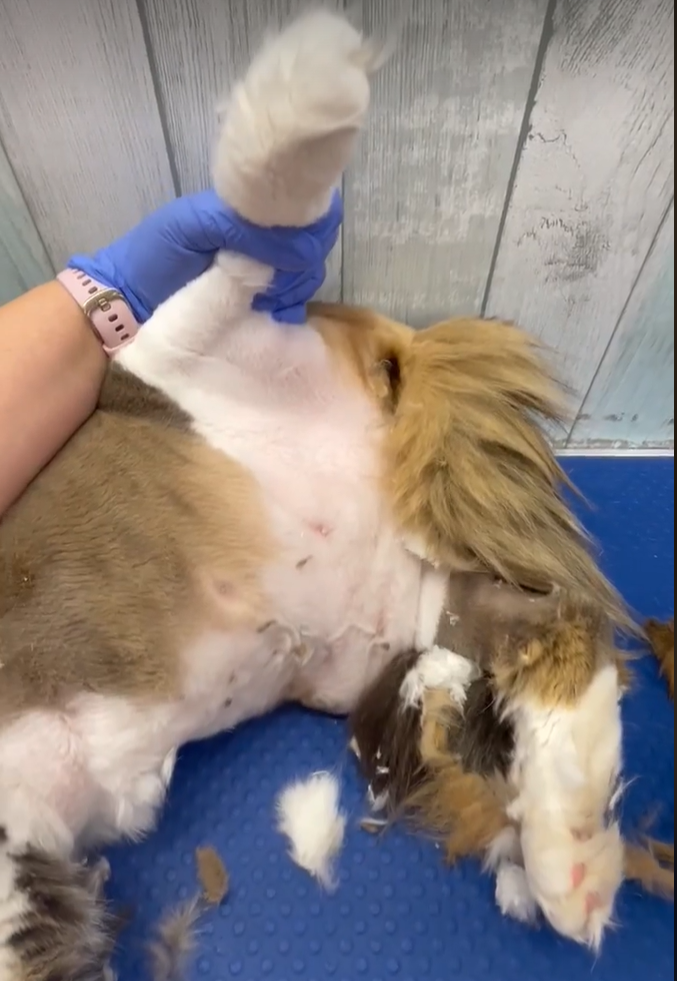
In Figure 2, the hip is being stretched into the abduction and external rotation. This will cause pain if the cat has underlying arthritis in the hip. The same applies if the hind leg is placed into extension.
(I had explained I see this hold regularly with hind legs being stretched but was not comfortable putting my model into this hold.)
Both these positions are painful if the cat has arthritis.
Here are some alternative holds:
Figure 3
Rolling the cat on its side and keeping the shoulder in a natural position. Using your elbow weight to keep the cat calm. I use my thumb to pull the skin tight instead of extending the cat’s joints.

Figure 4
Keeping the knee in line with the body. The hip must be comfortable in the natural joint position. Knee bent and lightly held at the hock. If this is uncomfortable for the senior cat, sit on a chair with the cat on your lap, on a yoga mat or on a cat bed.

Another way to support a cat’s comfort is to add a thick gym mat under the cat during grooming, or to ask the cat to receive pain relief before the groom if arthritis is present.
Please note this is for informational purposes only. There is no wrong way; I am just helping groomers make an informed decision when choosing handling techniques.
Learn more low-stress handling techniques in the Australian Certified Cat Groomer Course.
Ready to Take Your Cat Grooming Skills Further?
If you’re passionate about improving feline welfare, reducing grooming stress, and building a successful cat grooming business, consider becoming an Australian Certified Cat Groomer (ACCG). This certification program teaches feline behaviour, low-stress handling, anatomy, health conditions, modifications to grooming plans, business skills, and industry best practices to help you become a confident and knowledgeable cat grooming professional. Whether you’re new to grooming or looking to specialise in feline care, the ACCG course can help you stand out in a growing industry.
👉 Learn more and enrol today: Australian Certified Cat Groomer (ACCG) Course

 Cat Grooming Education