
So you want to wash a client’s (or your own) cat? I get asked this daily at the moment, so I thought it would be easier to post it!
It’s really not that hard! Some of my kitty clients prefer bathing to clipping! It’s the blow-dryer that scares most.
Those grumpy kitties are usually best in the bath when they are soaking wet. Most cats, when wet, are quite calm; once they are soaking, they seem to think they can’t move.
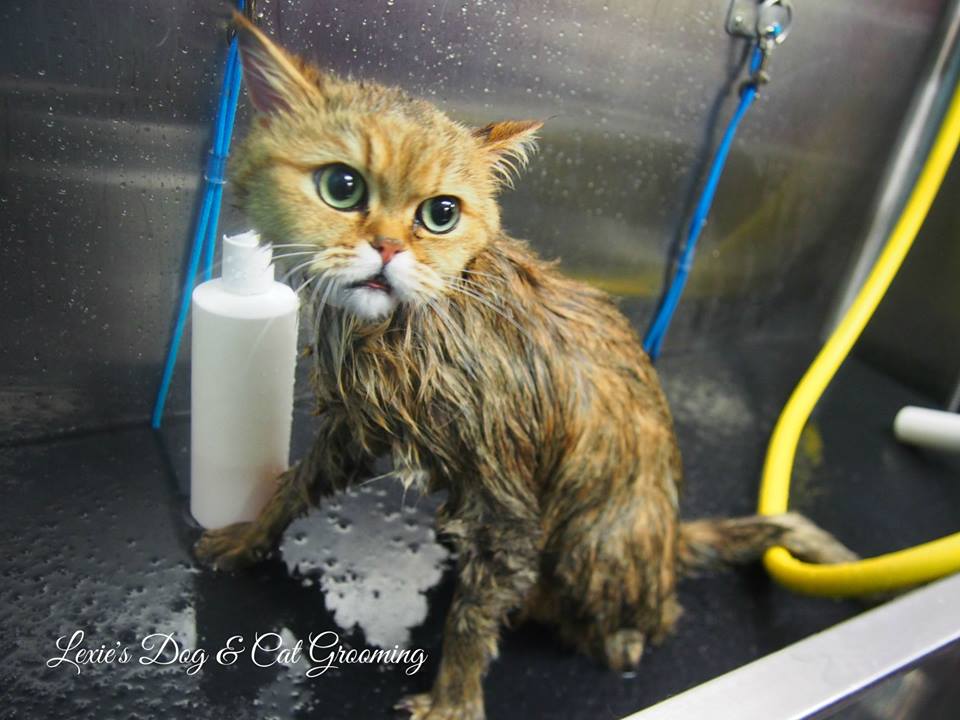
Have everything prepared BEFORE you grab your cat! You will need 2 towels, a bucket of lukewarm water or a shower hose, and a ‘pump brand’ water bottle of shampoo mixed with lukewarm water (use cat-friendly shampoo and conditioner only; I use Iv San Bernard Just for Cats; make sure it says cat-friendly on the bottle!). Shampoo bottle, Nail clippers, and an extra person if you can help it. Washing in the laundry sink or boosted bath is best. (No hydrobath)
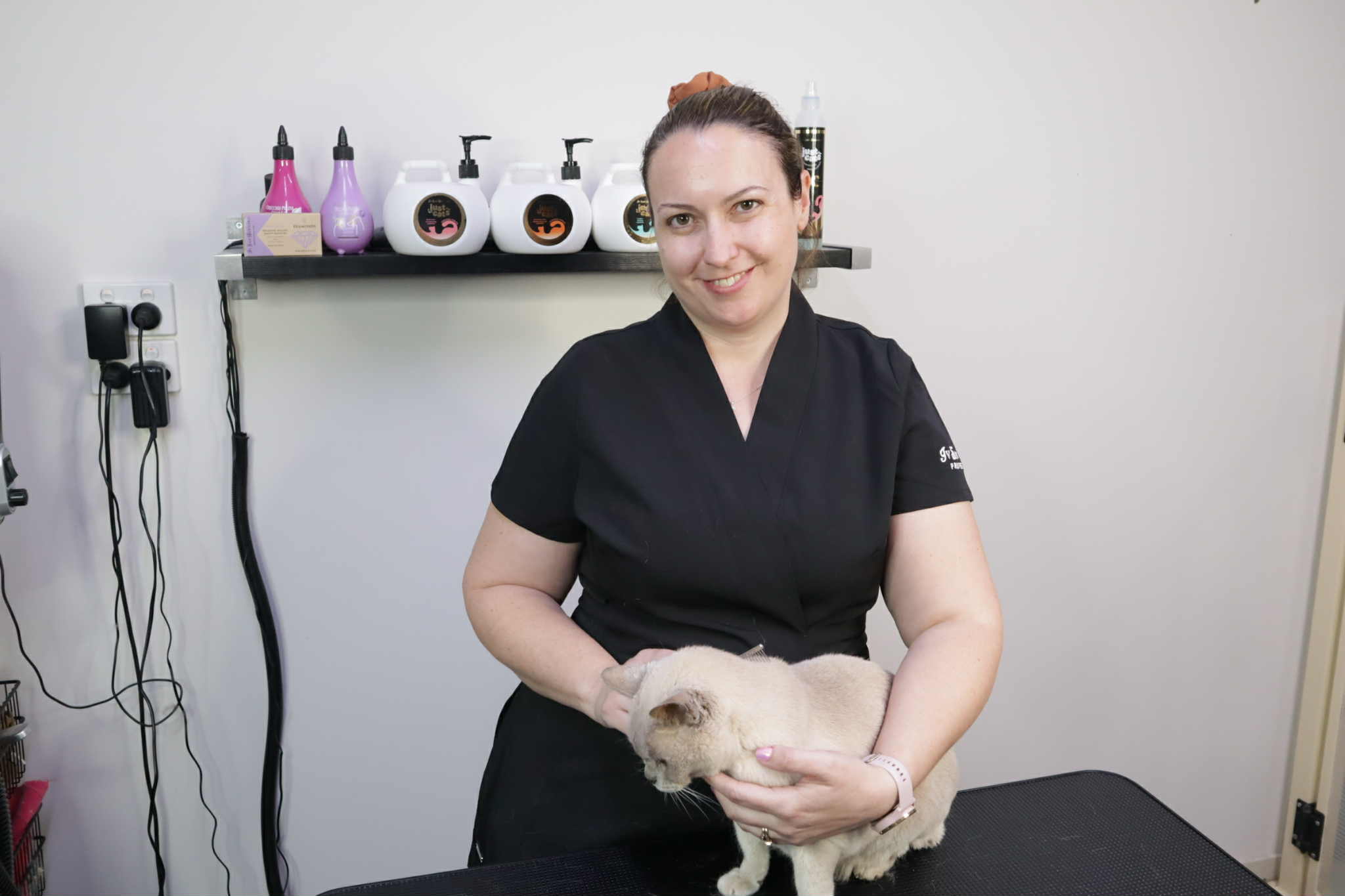
1. Put a towel on your washing machine or bench. Cut your cat’s nails before attempting to decrease scratching, if possible!
2. Put the cat in the sink/bath facing away from you, put pressure on the shoulders of the cat, and reassure the cat. Use the water bottle to wet the tail first, slowly and make your way up to the head, scrubbing as you go. Don’t wet the face or head only with your hands or kitty will get grumpy, if needs doing, do this last. Scrub as much as you can with one hand on the shoulders. Apply as much pressure as needed; scruff only as a last resort. Remember the cat might try to run away from the water until it is fully soaked. If you decide to put your hands in front of its neck, you will get bitten; keep your hands behind the cat.
3. Rinse using a bucket of water and a cup, as much as possible or a hose with a spray close to the skin so they cannot hear it.
4. Re-shampoo using your hands and shampoo. Scrub as much as you can.
5. Rinse again thoroughly. Do not use conditioner.
6. Towel over cat and put cat on other towel and dry as much as possible. If you are keen to blow-dry (if cats are not scared of the vacuum or your hairdryer, they may be fine), wrap the cat in a towel and put another towel over its head or a happy hoodie (so they can breathe but not hear) and put pressure on the whole cat, drying from tail up and combing at times. An HV dryer without the nozzle is usable. Do not blow-dry the bum or the cat will express its glands. To dry near the head, hold the ears down so no air gets in. Otherwise, comb your cat as it air-dries, but HV drying is best to remove loose undercoat and dandruff. (I like the Shernbao dryer with adjustable settings; you can barely hear it on.)
I recommend bathing every 4-6 weeks for optimal cat health.
I hope this helps!
Keep on grooming!
Lexie the Groomer, Certified Master Cat Groomer
Want to see all of this in action, including the handling skills? See my online cat owner courses at http://www.ultimatepetparent.com.au
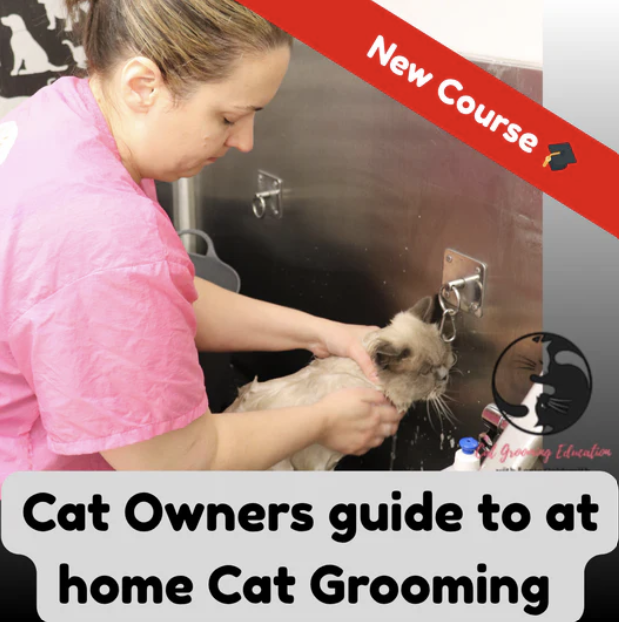
Ready to Take Your Cat Grooming Skills Further?
If you’re passionate about improving feline welfare, reducing grooming stress, and building a successful cat grooming business, consider becoming an Australian Certified Cat Groomer (ACCG). This nationally recognised certification program teaches feline behaviour, low-stress handling, anatomy, health conditions, grooming plan modifications, business skills, and industry best practices to help you become a confident and knowledgeable cat grooming professional. Whether you’re new to grooming or looking to specialise in feline care, the ACCG course can help you stand out in a growing industry.
👉 Learn more and enrol today: Australian Certified Cat Groomer (ACCG) Course

 Cat Grooming Education