

One of the most important skills a cat groomer can develop is the ability to recognise a cat’s emotional state. Understanding Fear, Anxiety, and Stress (FAS) helps us assess how a cat is coping during the grooming process and make adjustments before the situation escalates.
The goal isn’t just to complete the groom. The goal is to help the cat feel as safe and comfortable as possible throughout the experience.
What is FAS?
Fear
Fear is a cat’s response to something it believes may be dangerous. A fearful cat may try to flee, freeze, hide, or defend itself.
Anxiety
Anxiety occurs when a cat anticipates something unpleasant, even if the threat isn’t currently present. The cat is preparing itself for what it thinks might happen.
Stress
Stress is the body’s response to an emotional or environmental challenge. When the stressor is reduced or removed, the cat often begins to relax.
Why Is the FAS Chart Important?
The FAS chart is a valuable tool that helps groomers assess how well a cat is coping throughout the grooming process. In reality, every cat will show some level of Fear, Anxiety, or Stress when they come in for grooming. A truly relaxed FAS 0 cat is usually at home, asleep in their favourite spot, not in a grooming salon surrounded by unfamiliar sights, sounds, smells, and handling.
Our goal isn’t to expect every cat to be completely stress-free. Our goal is to keep the cat as comfortable as possible and minimise stress wherever we can. By recognising changes in FAS levels, we can adjust our handling, grooming plan, or environment to better support the cat’s emotional wellbeing.
In a perfect world, every cat would remain at a low FAS level throughout their groom. However, cats are both predators and prey, and being away from their familiar environment naturally causes some level of anxiety. This is one reason why some cats cope exceptionally well with house-call grooming, where they can remain in the safety and familiarity of their own home.
The FAS chart helps us understand what the cat is experiencing, make informed decisions during the groom, and ensure we are always putting the cat’s welfare first.
It helps us answer questions such as:
- Is this cat comfortable enough to continue?
- Should I change my handling?
- Do I need to slow down?
- Is the cat becoming overwhelmed?
- Should I stop and reassess?
By monitoring FAS levels throughout the appointment, we can make better decisions for the cat’s welfare and safety.
Remember, a cat showing signs of fear or stress is not being naughty, stubborn, or difficult. The cat is simply trying to protect itself from what it perceives as a threat.
It is also important to remember that aggression is an emotional response, not a label. Hissing, growling, swatting, biting, or scratching are often signs that a cat is experiencing fear, anxiety, stress, pain, or has become overwhelmed. Rather than saying a cat is “aggressive,” we should ask, “What is this cat trying to tell me?”
When we view behaviour as communication, rather than bad behaviour, we can better assess the cat’s emotional state, adjust our handling, and prevent FAS from escalating. Our role is not to push a cat through a groom, but to recognise when the cat is coping, when they need support, and when we need to change our plan.

What Can Affect a Cat’s FAS Level?
A grooming appointment starts long before the cat arrives at the salon.
Many factors can influence how a cat is feeling, including:
- Being caught and placed in a carrier
- The car ride to the appointment
- Separation from the owner
- New people and unfamiliar environments
- Grooming tools and equipment
- Water and blow dryers
- Other animals nearby
- Length of the grooming session
- Excessive handling or restraint
- Pain from matting, arthritis, or other health conditions
- Previous grooming experiences
- Past or current injuries
- Age and general health
This build-up of multiple stressors is often called trigger stacking, where each experience adds to the cat’s overall stress level.
How Can We Reduce FAS?
Small changes can make a big difference.
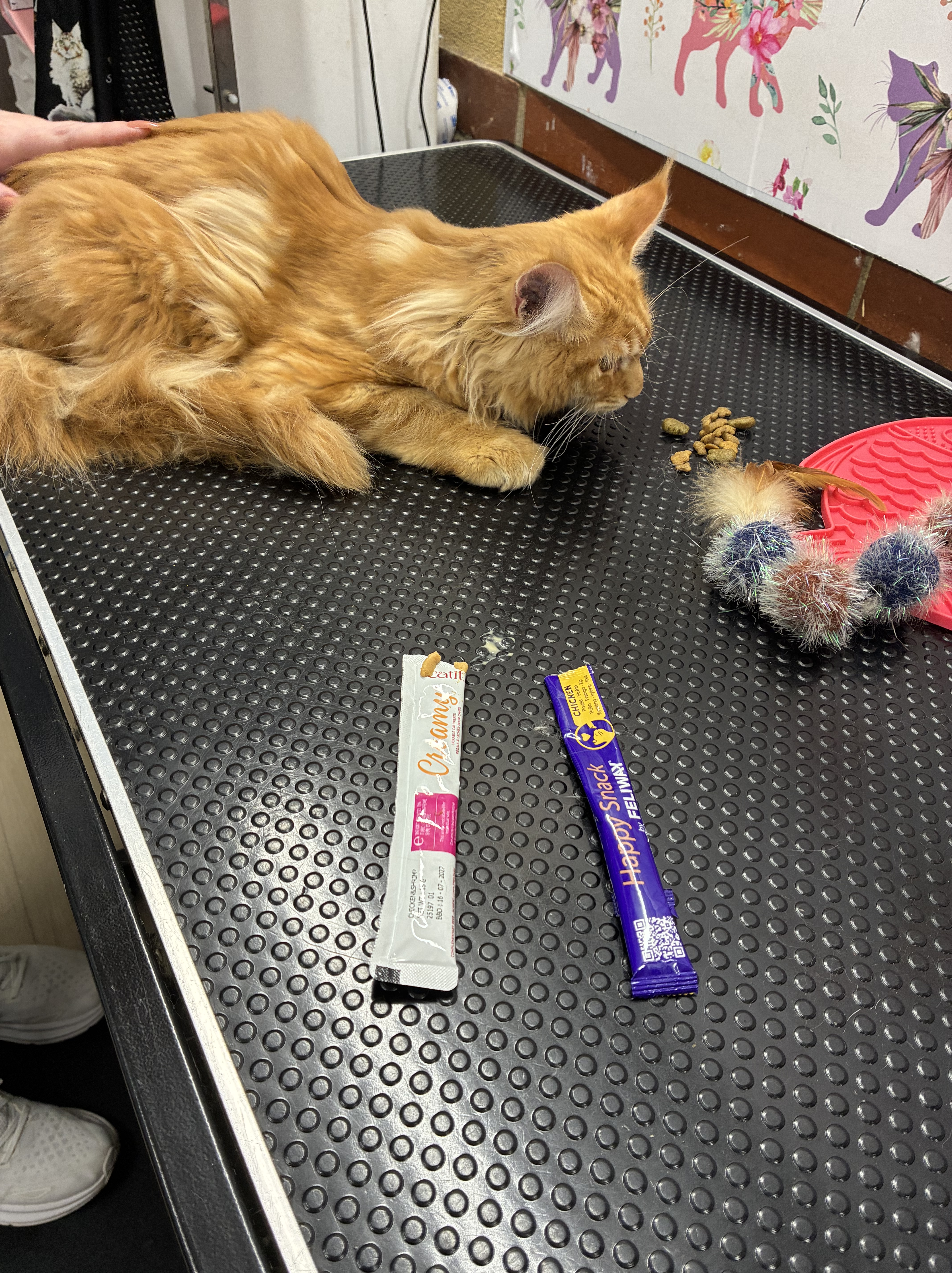
Meet-and-Treat Visits
For new clients, consider a brief visit with no grooming. This allows the cat to become familiar with the environment and the groomer.
Gather Information Before the Groom
Ask owners about:
- Previous grooming experiences
- Medical conditions
- Behaviour concerns
- Handling and grooming at home
- Known fears or triggers
Encourage Home Preparation
Owners can help their cats become more comfortable with handling, grooming tools, and noises by pairing these experiences with high-value treats and positive experiences.
Reassess Your Handling
If a cat’s FAS level begins to increase, changing your handling technique may help the cat relax and regain confidence.
Modify the Grooming Plan
Sometimes the best option is to adjust the grooming plan to suit the cat’s comfort level rather than pushing through a full groom. A shorter, less stressful appointment today can lead to better grooming experiences in the future.
Work With The Veterinarian
Some cats may benefit from a veterinary assessment for pain, underlying health concerns, behavioural support, or medication to help make grooming less stressful.
It is important to remember that behaviour can be influenced by medical conditions. A cat that suddenly becomes fearful, reactive, or difficult to handle may be experiencing discomfort rather than simply disliking grooming. Conditions such as arthritis, hyperthyroidism, dental disease, skin conditions, or other sources of pain can affect a cat’s tolerance for handling and grooming procedures.
Identifying and addressing underlying medical issues can significantly improve a cat’s comfort, welfare, and ability to groom. By working alongside veterinarians, groomers can help ensure cats receive the support they need for a safer and more positive grooming experience.
A Simple FAS Guide for Groomers
FAS 0-2: Proceed
The cat is coping well, and grooming can generally continue.
FAS 2-3: Slow Down and Reassess
Monitor the cat closely. Consider adjusting handling techniques, shortening the session, changing the grooming plan, or recommending additional preparation at home.
FAS 4-5: Stop and Reassess
The cat is struggling to cope. Consider rescheduling and discussing veterinary or behavioural support before the next appointment.
Putting the Cat First
A successful groom isn’t always about achieving a perfect finish. Sometimes success means recognising when a cat has reached its limit and making decisions that protect its emotional well-being.
By understanding FAS and regularly assessing how a cat is coping, we can create safer, lower-stress grooming experiences, build trust, and make grooming easier for the cat, the owner, and the groomer.
Learn More
Learn more about feline behaviour, low-stress handling, and professional cat grooming through the Australian Certified Cat Groomer Program. (PCCG International Certificate)
🌐 Website: Cat Grooming Education
📧 Email: learncatgrooming@gmail.com
Fear Free Pets https://www.fearfree.com/

 Cat Grooming Education