
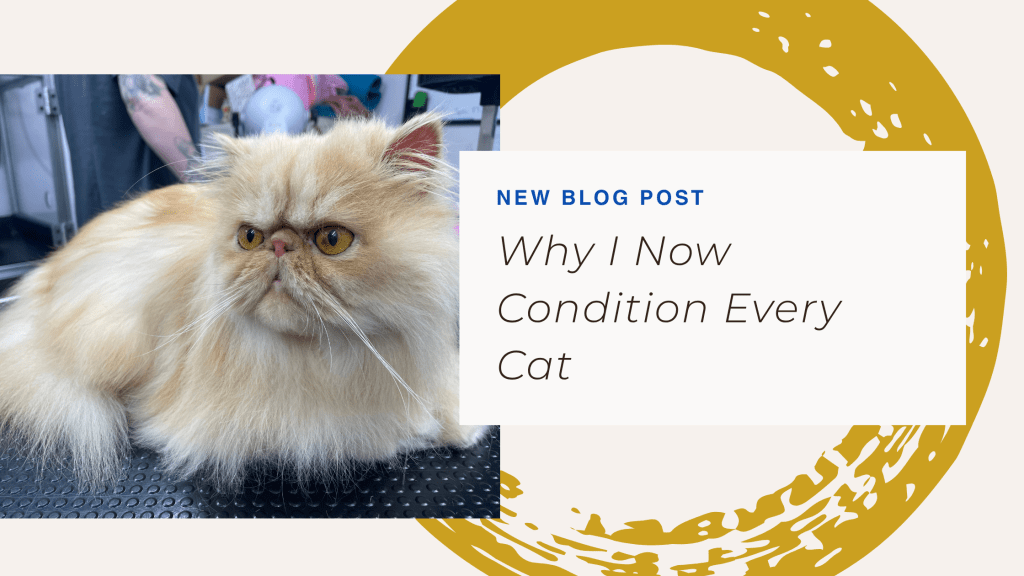
Two years ago, I made a significant change to my grooming process. I started conditioning every cat.
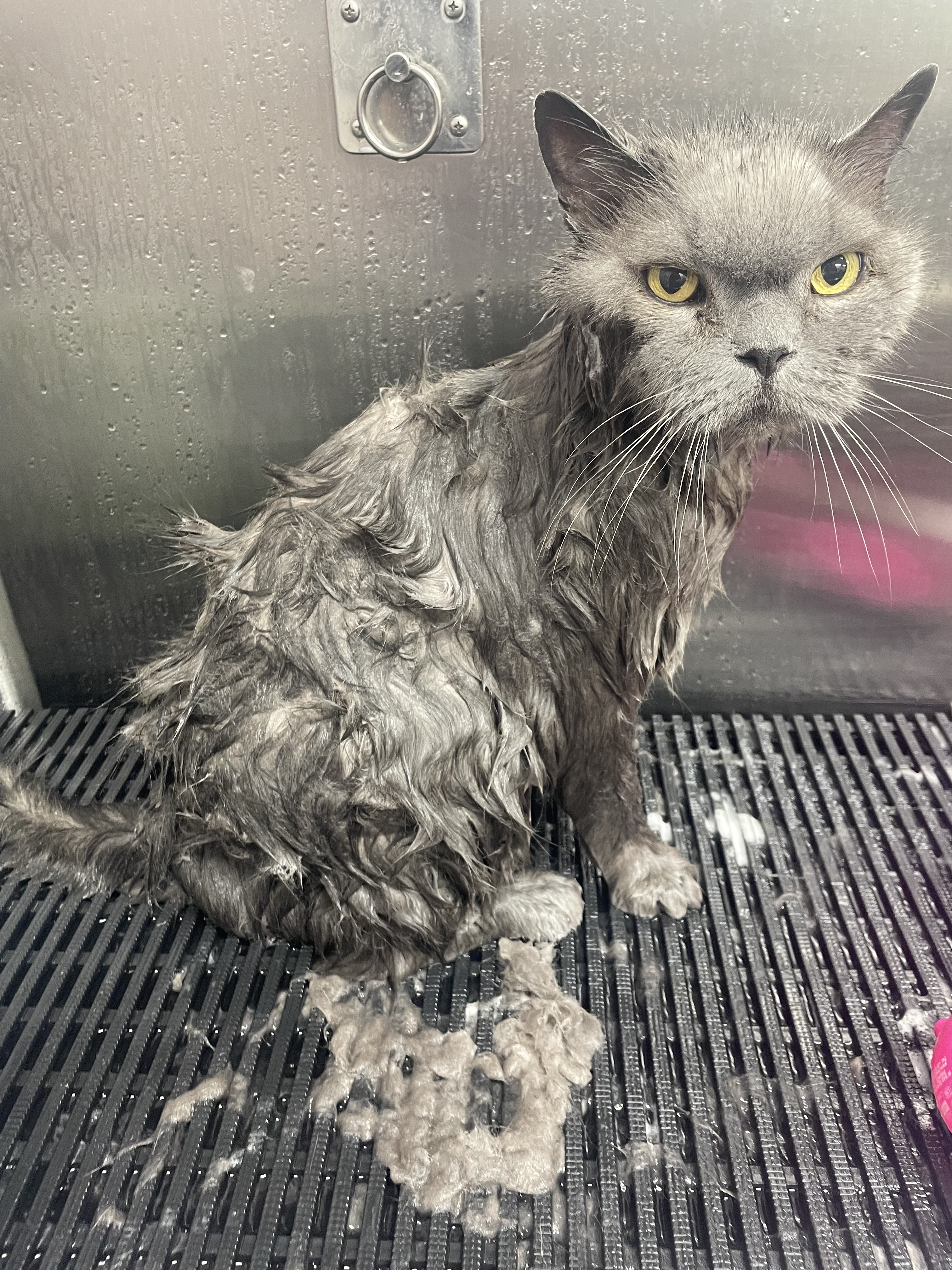
Like many cat groomers, I was focused on removing grease. If a cat came in with a greasy coat, stud tail, heavy sebum production or a coat packed with undercoat, my goal was to thoroughly degrease and cleanse the coat. The logic seemed simple: remove the oil and the coat would improve.
However, I started noticing a trend.
Some of the cats I was repeatedly degreasing were coming back just as greasy, if not greasier, than before. I found myself reaching for stronger degreasing methods more often, yet the long-term results weren’t improving.
The coats looked good on the day, but the comeback coats often told a different story.
That observation led me to start asking questions. Was I focusing too much on removing oil and not enough on understanding why it was there in the first place?
Looking Beyond Degreasing
I think many cat groomers focus on removing grease.
A cat comes in with a greasy coat, so we degrease. If it’s still greasy, we degrease again. The cat leaves feeling cleaner and fresher, and the groom appears successful.
But what I started questioning was what was happening underneath the coat.
Were we only treating the symptom?
Were we considering the skin?
Were we considering the role of sebum?
Sebum is not the enemy. It’s a natural and essential part of healthy skin and coat function. The skin produces sebum to lubricate and protect both itself and the hair shaft. Problems occur when too much is produced, when it becomes trapped within the coat, or when underlying health issues affect the cat’s ability to regulate oil production.
This was the shift in mindset that changed my grooming process.
Instead of asking, “How do I remove more grease?” I started asking, “How do I remove the excess grease while also supporting the skin and coat?”
The answer, for me, was conditioning.
Understanding Shampoo and Conditioner
As cat groomers, we have access to thousands of products designed specifically for pet grooming. New products are constantly appearing on the market, and as professionals, we need to understand not only how these products work, but what they do to the skin and coat.
The foundation of every bathing routine is shampoo and conditioner.
A shampoo’s primary role is to cleanse the skin and coat while preserving the natural protective barrier. Most shampoos contain water, surfactants, foam boosters, humectants, thickeners, pH stabilisers and preservatives. Many also contain additional ingredients designed to improve performance or marketing appeal.
Shampoos are extremely effective at removing dirt, excess oil and debris.
However, every cleansing process removes moisture and oils from the coat and skin.
That’s where conditioners come in.
What I Started Seeing in the Salon
When I began incorporating conditioners into my grooming routine, I noticed something unexpected.
The greasy cats improved.
As those cats returned for regular grooming appointments, I began seeing noticeable changes. Coats were easier to manage, excess grease was easier to remove, the undercoat released more readily, and dandruff was reduced significantly.
What impressed me most wasn’t the finish on the day.
It was the condition of the coat at the next appointment.
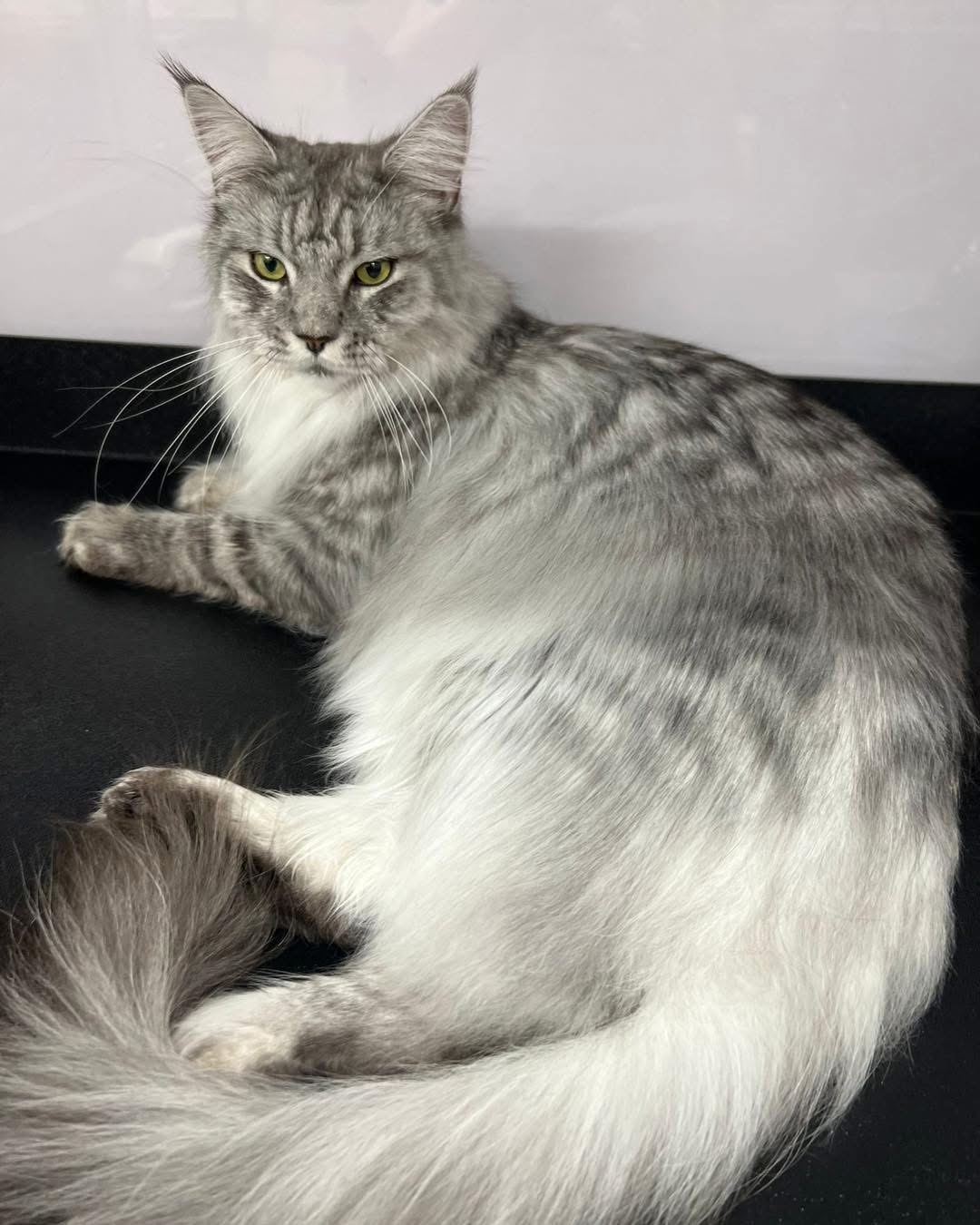
Many cats were returning with healthier coats, less coat compaction and less excessive grease build-up than I had previously seen. The coats were easier to work with, easier to dry and generally in far better condition.
The more cats I conditioned, the more confident I became that I was seeing genuine long-term improvements in coat quality.
Backed by Skin and Coat Science
After making these observations in the salon, I completed the Pet Skin Academy Skin and Coat Science Module. (And no, I don’t get kickbacks from any of this; I only recommend products and content that I personally believe in.)
What I found particularly interesting was that much of the content, written by a veterinarian, supported what I had already been observing in practice.
Conditioners are not simply products designed to make the coat feel soft.
They play an important role in maintaining skin and coat health.
Hair carries a negative charge, while conditioners contain positively charged molecules. These molecules are attracted to the hair shaft, especially damaged areas, where they deposit conditioning agents that help smooth the cuticle, reduce friction and improve manageability.
The result is a coat that is:
- Softer
- Smoother
- Less prone to static
- Easier to comb and dry
- More resistant to tangling
- Better protected between grooming appointments
More importantly, certain conditioners help restore hydration to the skin and coat after cleansing.
Humectants and Emollients
Not all conditioners work the same way.
Humectant conditioners are formulated to attract and retain moisture. Ingredients such as glycerin, propylene glycol and panthenol help maintain hydration within the coat and skin.
These are particularly beneficial for cats with:
- Dry coats
- Flaky skin
- Dandruff
- Brittle coat texture
For most cats, humectant conditioners are my preferred choice because they provide hydration without leaving a heavy coating on the coat.
Emollient conditioners work differently. They form a protective layer that seals in existing moisture and reduces water loss. Common ingredients include natural oils, fatty acids and silicones.
These can be especially useful for coarse, rough or dull coats when selected appropriately.
The Role of Sebum and Undercoat Release
One of the biggest benefits I’ve noticed is improved release of trapped undercoat.
Cats with excessive sebum production often have undercoat that becomes trapped within the coat. Excess oil acts almost like glue, binding dead hair, dander and undercoat together.
When an appropriate conditioner is used, it helps soften and loosen that excess sebum. This makes it easier to remove during the grooming process, allowing the trapped undercoat to release more effectively.
The result is:
- Better undercoat removal
- Improved airflow to the skin
- Less coat compaction
- Better drying times
- Improved coat texture
- Better overall finish
It’s important to note that cats with underlying health conditions often continue to produce excess oil and sebum. Grooming cannot cure a medical issue. Excessive oil should be checked by a veterinarian, along with other symptoms.
However, I have found that conditioning helps manage excess sebum more effectively while supporting the skin rather than simply stripping the coat repeatedly.
Benefits I’ve Seen from Conditioning Every Cat
Since making conditioning a standard part of every groom, I’ve consistently seen:
- Better coat finishes
- Improved coat texture
- Easier drying
- Reduced static
- Better undercoat release
- Reduced dandruff
- Less coat compaction
- Better management of excessive grease
- Healthier comeback coats
The biggest difference has been seeing cats return in better condition at their next appointment.
For me, that’s the true measure of a successful grooming system.
Choosing the Right Conditioner
Not every conditioner suits every cat.
It is important to choose feline-safe products and understand the purpose of each formulation.
Some of my favourite feline conditioners include:
- Iv San Bernard Just For Cats Conditioner (Apricot, Keratin and Coconut). – a lightweight conditioner specifically formulated for feline skin and coat care.
- Iv San Bernard pH Balance Conditioner – designed to help support healthy skin and coat balance.
- Iv San Bernard PEK Conditioner – one of my favourite choices for greasy, sebaceous and dandruff-prone coats. The humectant-rich formula helps support hydration while assisting with grease management and undercoat release.
Whether you are using moisturising, detangling, protein-based, leave-in or hypoallergenic conditioners, the goal should always be to support the skin and coat without creating build-up.
Signs you’ve selected the wrong conditioner, used too much, or failed to rinse adequately include:
- A chunky-looking coat
- A greasy or oily appearance
- Extended drying times
- A coat that feels heavy after drying
Conditioners should improve the coat, not weigh it down.
The right conditioner will actually have faster drying times, not slow them.
Final Thoughts
My decision to condition every cat didn’t come from a trend or a manufacturer’s recommendation.
It came from what I was seeing in my salon.
Two years ago, I noticed that repeatedly degreasing some cats wasn’t producing the long-term results I wanted. The coats looked great on the day, but they weren’t necessarily improving over time.
When I introduced conditioning into my grooming process, the coats started telling a different story.
Cats returned with healthier coats. Dandruff reduced. Undercoat is released more effectively. Excess grease became easier to manage. The coats finished better, dried better and came back in better condition at their next appointment.
Later, studying skin and coat science through the Pet Skin Academy Skin and Coat Science Module provided the scientific explanation for what I had already been observing firsthand, reinforcing the importance of supporting the skin while grooming the coat.
Today, conditioning is no longer an optional extra in my salon and teaching. It is an essential part of my grooming process.
Because my goal isn’t simply to send a cat home looking beautiful for the day.
My goal is to have that cat come back in even better condition at its next appointment.
Learn More
Understanding feline skin, coat function, product selection and evidence-based grooming techniques is a core part of the Australian Certified Cat Groomer Course. (International version Professional Certified Cat Groomer Course)
The course explores feline skin and coat science, grooming products, coat types, handling, behaviour, health considerations and professional grooming techniques, helping groomers make informed decisions that improve both grooming outcomes and feline welfare. Written by two Master Cat Groomers and Qualified Vet Nurses, wanting to change Cat Grooming.
Because great cat grooming isn’t just about how a cat looks when it leaves the salon. It’s about the health and condition of the coat when it comes back. 🐾

 Cat Grooming Education